.png)
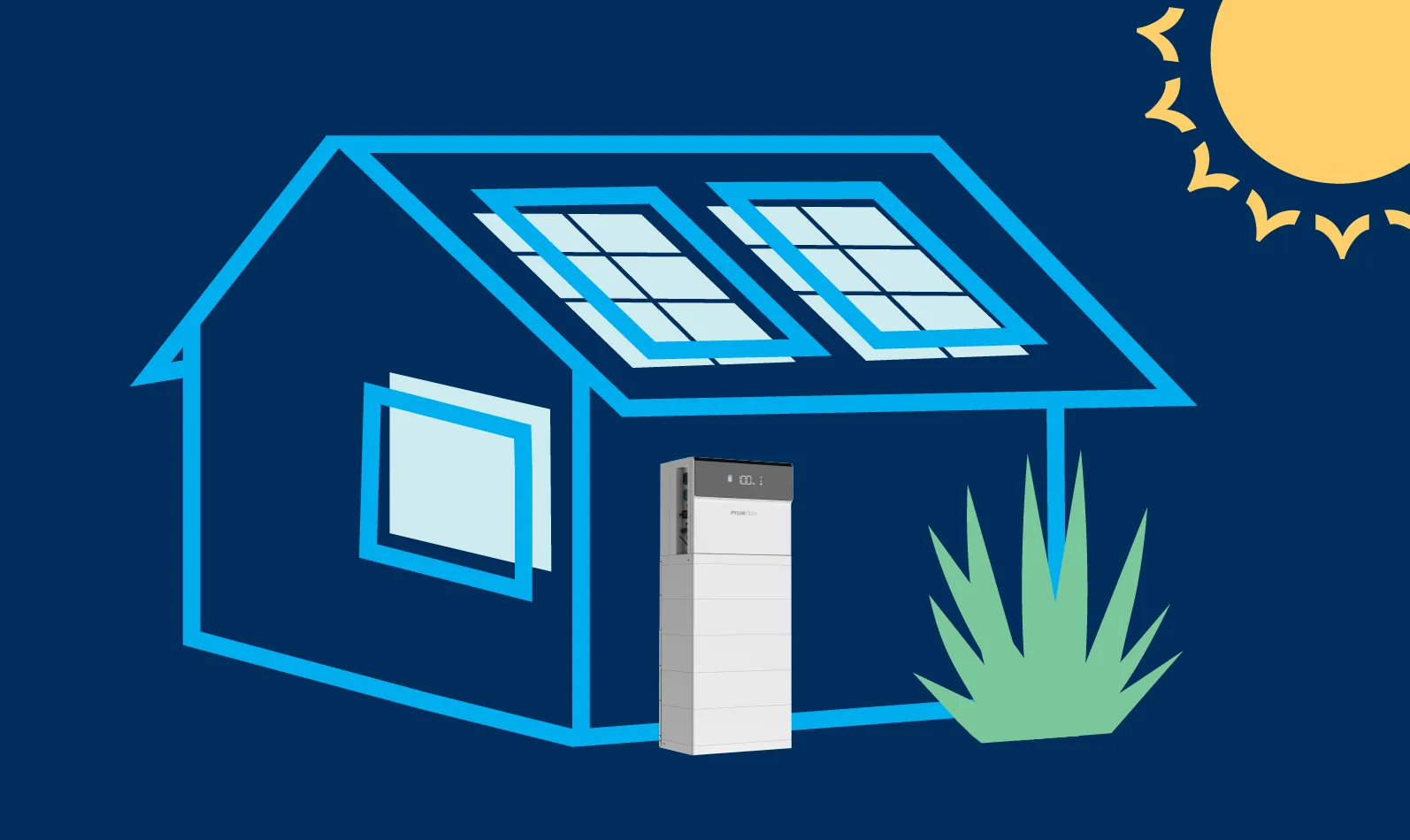
Backup circuits are designed to provide power to selected essential appliances during a grid outage by routing specific circuits through the solar inverter and battery system. This allows items such as lighting, refrigeration, internet, and selected power outlets to continue operating automatically when the grid fails.
However, backup circuits are limited by the inverter’s maximum power output rating (kW). If the combined load of appliances operating on the backup circuits exceeds this rating, the inverter will trip to protect itself, the battery, and connected equipment. This protection shutdown can occur during a blackout and also while grid power is available, because the backup circuits still have a fixed capacity limit.
High-demand appliances such as kettles, heaters, microwaves, air conditioners, and other resistive or motor-driven loads can quickly exceed the limit when used simultaneously. This is a normal protective function of the system rather than a fault, and managing which appliances operate at the same time — or relocating heavy loads to non-backed-up circuits — will help ensure reliable operation.
Please note, EV chargers should not be connected to inverter backup (essential) circuits, as their high power demand can easily exceed the backup capacity and cause the system to trip or shut down. However, EV chargers can be connected to the main AC output circuit of the inverter, allowing any solar energy generated to help charge your EV.
Key considerations:
- Starting vs. Running Watts: Motors in refrigerators and pumps require 2–3 times more power to start than to run. Water pumps may require the addition of a softstarts device or Variable Speed Drives (VSD’s) to reduce startup current draw to allow them to operate on the backup circuit without tripping the inverter. This is dependant on pump size and the capacity of your inverter and can incur additional cost
- Backup Time: A small standalone Uninterruptible Power Supply (UPS) back up system may only run a computer for 10–15 minutes, while a home battery (like a Pylontech Force H3X) can run critical loads for hours or days.
- Switching Method: A transfer switch (manual or automatic) is required to safely connect the backup source to these circuits
In a three-phase backup system, the inverter’s total power rating is shared evenly across each phase, which means the available backup capacity per phase is limited. For example, a 10kW three-phase inverter can supply a maximum of 10kW in total, but this is distributed across three phases — providing approximately 3.3kW per phase. This means each backup phase can only support up to around 3.3kW at any one time. If the load on any single phase exceeds this limit, the inverter will trip to protect itself, the battery, and connected equipment, even if the other two phases are lightly loaded. Similarly to above, this can occur not only during a grid outage but also while grid power is present, because they still have a fixed per-phase capacity limit.
Your inverter includes one backup circuit for single phase properties, and three backup circuits for three phase properties, which are activated during a grid outage and powered by the system batteries and or solar.
The inverter can provide power to the backup circuit if:
- Power is available from batteries or solar; and Total household, continuous power demand does not exceed the inverter rating capacity
- Total power demand is less than solar PV energy available and/or battery stored energy to meet the demand of the inverter/house loads
Generally, you should connect the minimum number of devices.. Only essential or low consumption devices or appliances should be connected to the backup circuit. Devices that require high currents should not be connected as they may trip the inverter or rapidly discharge the batteries. The table below lists the suitability of common devices.
ITEMS SUITABLE FOR BACK-UP CIRCUITS
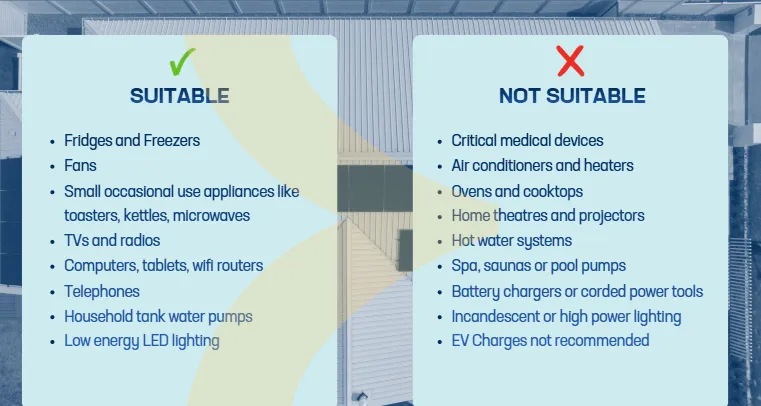
Here are some typical examples of devices and appliances added to back-up circuits:
ESSENTIAL ELECTRONICS AND COMMUNICATION
These are low-power, high-priority items needed within your household.
- Wi-Fi Router and Modem
- Computers/Laptops
- Surveillance Systems: Security cameras, DVRs, and alarm systems.
- Phones or Landlines
CRITICAL HOUSEHOLD APPLIANCES
These items prevent damage to the home or food spoilage.
- Refrigerator and Freezer
- Wetback circulators
- Water Pumps: Necessary for water pressure within rural environments
LIGHTING AND ACCESS
- LED Lighting Circuits: Key areas like kitchens, bathrooms, and hallways.
- Select Wall Outlets: For charging essential devices
- Garage Door or Electric Gates Opener: To ensure home access
Items generally excluded:
- Electric Clothes Dryers
- Electric Ovens
- Critical medical devices
- Multi-split heat pump system
- Pools and Spa Pools
- Water Heaters
- Home theatres and projectors
HOW TO AVOID INVERTER SHUTDOWNS?
The total power load matters: simultaneously running a kettle, toaster, microwave, large fridge, TV and a few lights can easily exceed the allowable power delivery, and an inverter shutdown will occur.
REGULATION & COMPLIANCE
- Please note that a licensed electrician is required to install any transfer switch or backup circuit. We adhere to AS/NZS 3000 (the Wiring Rules) which is the mandatory standard for electrical installations in New Zealand, covering design, construction, and verification.
- Orion/Vector/EA regulations — Any grid-connected solar and battery system fitted in New Zealand requires compliance with your lines company's requirements.
- Distributed Generation agreements — customers exporting to the grid need a DG agreement with their lines company,
- Building consent — worth noting that some backup installations may require a building consent depending on scale and what's being modified.
.avif)