.png)
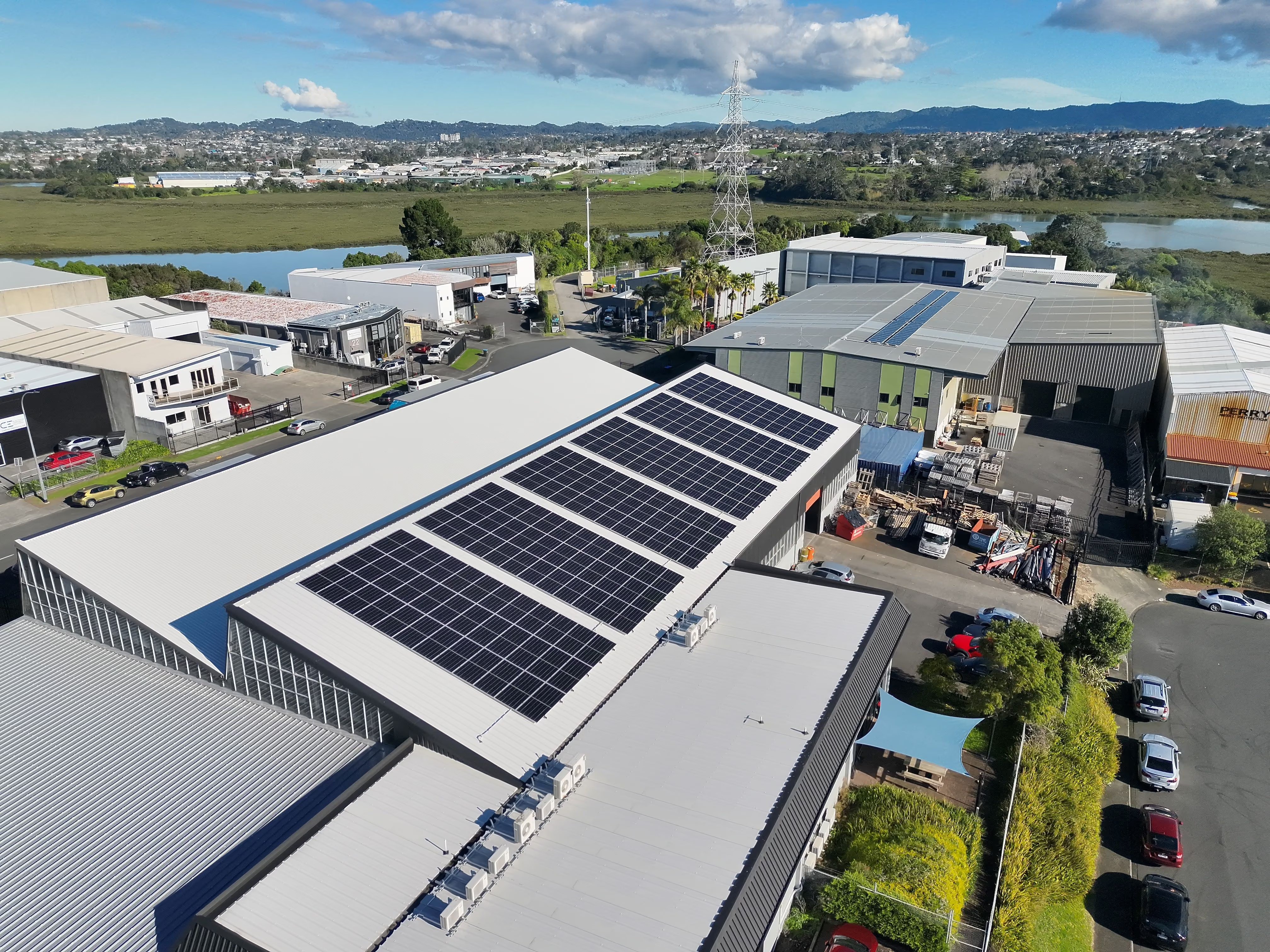
Metalbilt: New roof perfect backdrop to solar-backed energy savings
Metalbilt (ARA Manufacturers) is a long-established and leading industrial and commercial door designer and manufacturer that began servicing Auckland in 1954 and was purchased by the ARA Group in 2019.
They came to us as high power users, with daytime shift operations making them perfect candidates for solar energy. Their main objectives were to reduce their power bill and operating costs, as well as reducing grid reliance due to the increasing costs of gas and electricity.
How tenants and landlords can align on energy and building goals
For 35 years, Metalbilt has called the same Avondale address home.
But unlike owner-occupied businesses, Metalbilt is a tenant - a position that can complicate major site infrastructure investments like solar. How do you justify installing expensive equipment on a roof you don’t own? And how do you convince a landlord that your vision aligns with their interests?
Last winter, Metalbilt found the answer. Working with ZEN, they installed a powerful 132kW solar system on their roof and proved that landlord-tenant partnerships can be highly aligned when it comes to renewable energy solutions.
When Metalbilt General Manager, Paul Hancock, first approached solar, the proposition was clear.
"The equation for solar was simple and payback is straightforward and short, it will be complete before our lease runs out. The numbers are better than we thought they were going to be."
The Board was on board with the commercial benefits. And so next to engage was the landlord.
Creating the win-win benefit
In some instances, landlords can view solar installations as complex, risky, or an obligation that extends beyond their control. But Metalbilt’s landlord saw it differently.
“It wasn’t a hard-sell,” Hancock explains. “They understood the benefits.”
The key was structure. Rather than asking the landlord to fund the system, Metalbilt took on the full capital cost themselves. What did the landlord contribute? They invested in infrastructure that would benefit the building regardless: they replaced the roof and handled other maintenance elements as part of their capital expenditure programme.
This arrangement benefited both parties. The landlord got a roof upgrade they needed anyway. Metalbilt got the foundation for their solar investment. Neither party overextended, and both reaped tangible benefits.
Some executives grow cautious when capital investments sit on leased property. What if the tenant leaves? What happens to the system?
The answer was simple: the solar system stays with the building. If Metalbilt ever vacates, the new tenant inherits the solar infrastructure. It becomes an asset of the property, not a burden on the departing tenant. This arrangement actually increases the building’s value—a benefit the landlord could present to future tenants.
The supplier matters
Hancock shopped around. “I reached out to several solar companies,” he says, “but ZEN was the only one who came back to us in a timely way. One company replied to me three months after I had my system installed!”
Speed and responsiveness aren’t glamorous, but they matter. When you’re navigating the complexities of a landlord-tenant solar project, you need a partner who moves at your pace and understands your timeline.
Three key lessons for business tenants
Reflecting on the experience, Hancock offers actionable advice for other business tenants considering solar:
1. Start with trust. Hancock and his landlord had developed a strong relationship built on years of reliable interaction. “Would I say we’ve always had a really good relationship with our landlord?” he asks. “Yes. And is there a lot of trust there? Yes. And that mattered.” Trust shortens negotiations and simplifies problem-solving. If you don’t have it yet, invest in building it before proposing major capital projects.
2. Align incentives. Don’t ask the landlord to fund something that primarily benefits your operation. Instead, find ways to layer mutual benefits—like combining necessary roof maintenance with solar installation. This transforms a request into a win-win.
3. Choose your partner wisely. Your solar provider isn’t just installing panels—they’re navigating a three-way conversation between you, your landlord, and permitting authorities. You need someone responsive, reliable, and experienced in tenant-landlord dynamics. Speed of communication is a feature, not a luxury.
Products
- 1 x Huawei SUN2000 100.0kW 3P Inverter
- 216 LONGi Panels 615W
- Premium Clenergy rails
“The entire process from sales approach, to quoting and installation planning was extremely well managed. There was minimal disruption to our operations, and every step was communicated and co-ordinated to minimise disruption. Six months in, we’re seeing a very strong performance and output from the system which is better than expected. Thanks ZEN Energy….it was great to work with you.”
- Paul Hancock, General Manager, Metalbilt