
.png)
Powering science: the Bioeconomy Science Institute’s solar journey
How New Zealand's largest research institute turned an energy challenge into a blueprint for electrification — with solar at its heart.
The challenge: energy costs and grid constraints
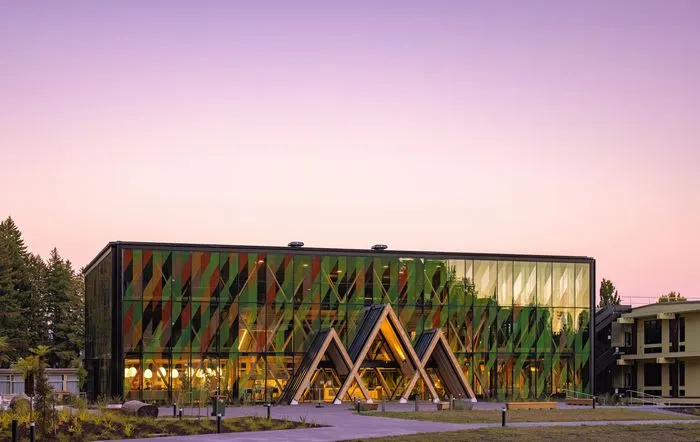
The Bioeconomy Science Institute, New Zealand's largest public research organisation runs a large, complex research campus in Rotorua specialising in forestry science. The site previously operated as Scion before it became part of the Bioeconomy Science Institute. It runs around the clock, maintaining precise temperature conditions for millions of dollars' worth of sensitive scientific equipment and experiments — an energy-intensive commitment that comes with a substantial bill.
Roughly half of the site's total energy requirements had historically been met by natural gas. But a volatile gas market and an increasingly expensive supply contract made that dependency feel increasingly precarious. At the same time, the site faced a hard physical limit: the existing grid connection lacked the capacity to replace natural gas with grid electricity alone.
“Getting away from natural gas has been the goal for a while. But we don't have the supply capacity on the grid to meet all of our energy needs. So we needed to think differently.”
— Jeremy Peake, science engineer, Bioeconomy Science Institute
A change in perspective on solar
For years, Scion had been told solar wasn't viable for its Rotorua site. An electrical engineer had advised that payback periods were too long and that the region didn't receive enough sunshine hours to justify the investment.
The turning point came when a different engineer challenged that assumption and connected Scion with ZEN Energy. The initial proposal told a different story, and the team's enthusiasm was sparked.
An earlier, small-scale solar installation had hinted at the real numbers; the underlying data showed a payback period closer to five years — not 20. Scion wanted to increase its solar adoption, with an end-to-end solar provider as its next step.
“We wanted to prove the same maths worked with a full turnkey solar solution provider. It's worked out better than we anticipated.”
— Jeremy Peake, science engineer, Bioeconomy Science Institute
Understanding the energy profile
The Bioeconomy Science Institute’s Rotorua load profile is unlike that of most commercial sites. Natural gas heating kicks in well before dawn — sometimes through the night — to maintain stable temperatures in laboratories and equipment rooms. There is no option for turning those systems off. The cost of temperature fluctuation, in terms of compromised experiments and equipment damage, would far exceed any energy savings.
Electricity demand, by contrast, follows a more conventional arc. It peaks sharply during hot weather, when the site's chilled water cooling system draws heavily on the grid. This cooling demand correlates well with solar generation times, making solar a natural fit for managing those peaks. Other energy-intensive systems include compressed air, electric water heating and safety-critical extraction systems that operate continuously.
The solar installation: building in stages
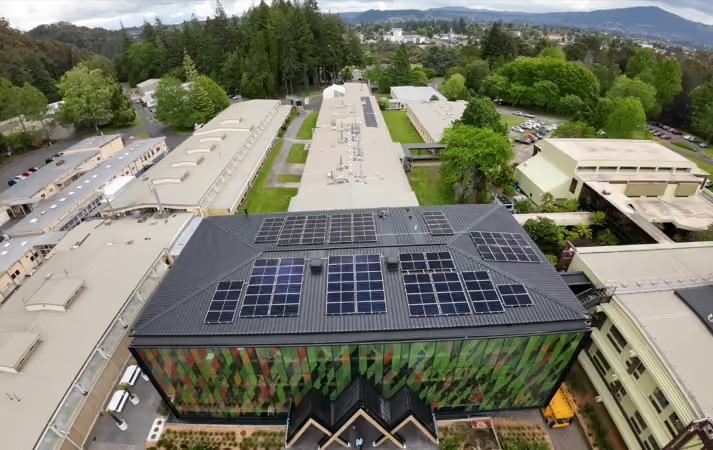
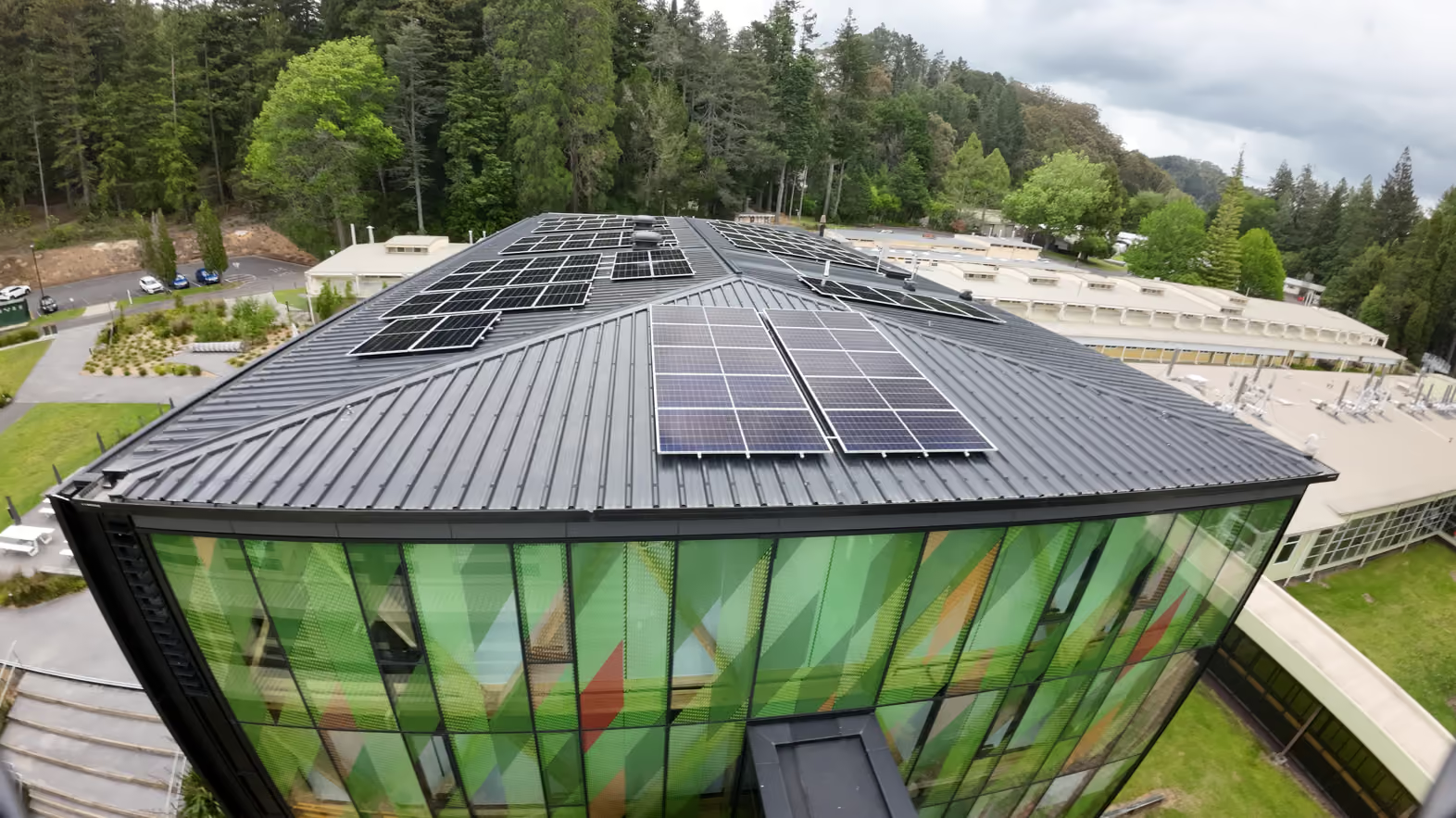
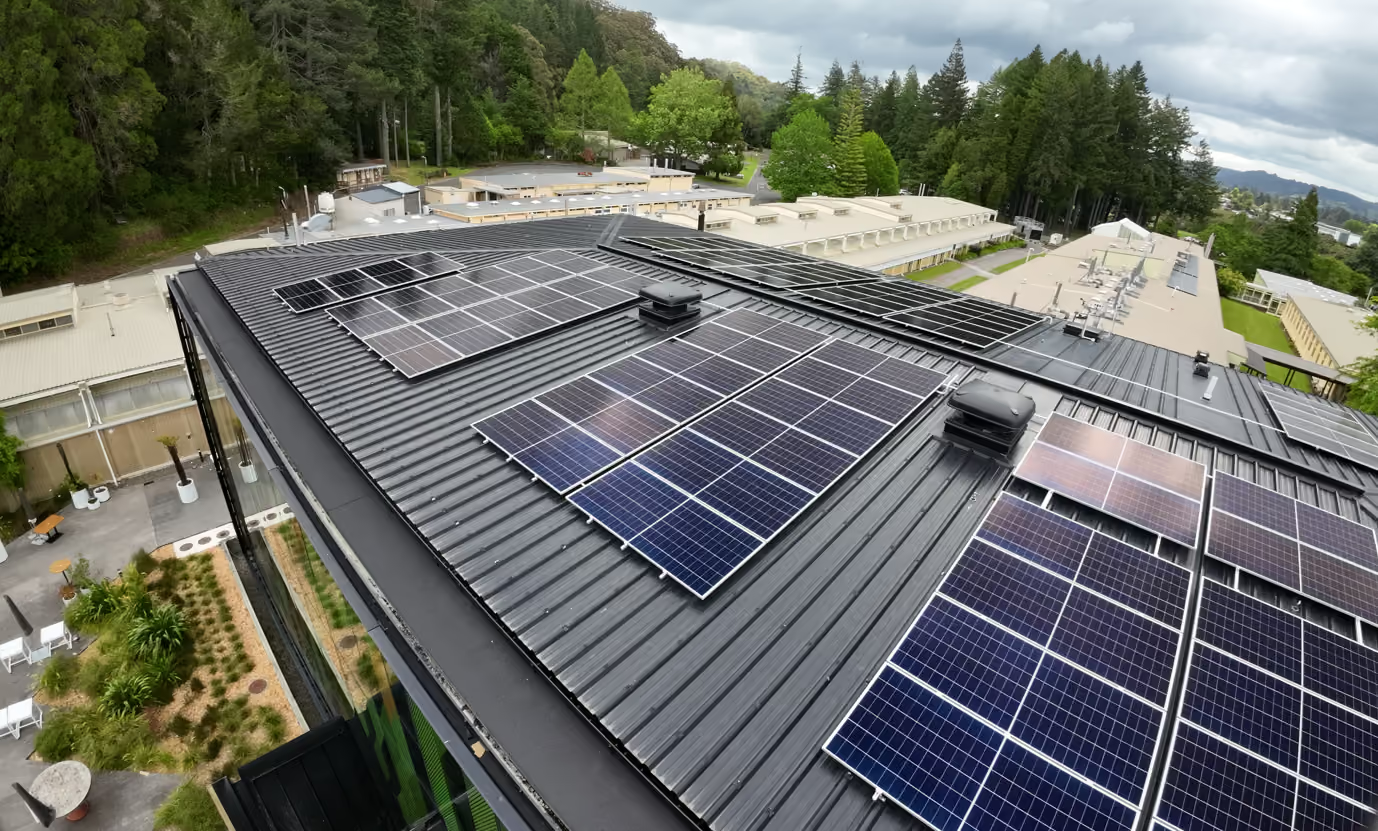
Scion engaged ZEN Energy in 2024 – before joining the Bioeconomy Science Institute – for its second solar installation. There were clear objectives: to demonstrate the financial case to the board, continue the transition from natural gas and begin reducing the site's energy costs.
Scion built a custom solar dashboard, drawing live data from the new inverters and their site meters, giving the team full visibility of generation, load and the proportion of demand being met by solar at any moment. December — the first full month with both systems online — significantly exceeded generation expectations.
System performance snapshot
• Combined peak capacity: 74.8 kW across two systems
• 80 MWh total generation since commissioning
• Solar supplying approximately 14-17 percent of site load during peak sunlight hours
• Projected payback period: 4.5 to 5 years
Why sustainability wasn't the primary pitch
The Bioeconomy Science Institute has strong sustainability objectives as an organisation, but that didn’t mean sustainability was used as the main argument to secure funding for solar in the Scion days. Trying to make it one could have been counterproductive.
In New Zealand, the electricity grid is largely renewable. It can create a perception, particularly at board level, that grid-tied solar may not be the strongest sustainability measure in the conventional sense. Rather than lean on an ESG pillar, Scion management focused on the practical and financial case: reducing dependence on volatile natural gas, managing grid capacity constraints and demonstrating a clear return on investment.
The solar sustainability contribution is now being tracked and communicated internally and there’s increasing company-wide and senior management interest.
Energy management: a track record of improvement
Interestingly, Solar sits within a wider energy management programme Scion had been running for several years. It launched a comprehensive submetering project 3-4 years ago, installing a network of meters across the site to understand exactly where energy was going. This led to a reduction of about $250,000 in the annual electricity bill, a saving of approximately 20 percent.
Those efficiency gains are now harder to find. The focus has shifted toward fuel switching — deliberately moving consumption away from gas and toward electricity, accepting the electricity bill will rise in the short term as a consequence of decarbonising and derisking the operation.
What's next: batteries and a continued solar rollout
With solar delivering on its promise, the Bioeconomy Science Institute’s attention is now focused on Battery Energy Storage Systems (BESS). At the moment, the site load met by solar is sitting at 14%. So it will be up to the Bioeconomy Science Institute as to whether they want to expand this in due course. Several of the Rotorua site's ageing natural gas heating systems can no longer be maintained and the grid connection cannot supply the electricity needed to replace them directly.
A battery system would allow the Bioeconomy Science Institute to store solar generation and off-peak grid power, then deploy it to cover high-demand periods. If approved, the battery project would unlock several critical gas-to-electric transitions not currently possible. A continued solar rollout is expected to follow, likely from 2027.
“The future focus is on battery storage to address capacity constraints. We have heating systems that we must move away from gas, but lack the grid capacity to replace them. We need to generate more or store it.”
— Jeremy Peake, science engineer, Bioeconomy Science Institute
The value of a true turnkey partner
For the Rotorua site, where the energy team is small and internal capacity is stretched, the value of a true turnkey solution mattered enormously. A supplier who manages the process end-to-end — from design and procurement through to installation, commissioning and after-care — removes the friction that often stalls energy projects at the procurement stage.
The relationship is now an established part of the Bioeconomy Science Institute's energy partnership ecosystem, sitting alongside Power Solutions and EECA (which have co-funded several efficiency projects on site). ZEN Energy's role focuses specifically on bringing more renewable energy into the site, cost-effectively and with minimal demand on the Bioeconomy Science Institute team.
“The team at ZEN has been a pleasure to work with. It's a real turnkey approach. You haven’t expected us to do half the work, unlike other suppliers. And you were extremely competitive on price.”
— Jeremy Peake, science engineer, Bioeconomy Science Institute
Thinking about solar for your site?
Whether you're navigating grid constraints, rising energy costs or a long-term electrification roadmap, ZEN Energy can help you understand what's possible — with a full turnkey service from first proposal through to installation and ongoing support.
